Inside Trivera™ dressings.
FeynMed's antimicrobial wound dressing will be built on nanocrystalline silver, manufactured at our Edmonton pilot facility with atomic-scale control over the crystal structure. Here's what that means and why it will matter at the bedside.
Engineered silver, at the right scale.
Silver has been used in wound care for more than a century. The question has never been whether silver works. It does. The question is whether it is delivered in a form that provides consistent activity in clinically relevant environments. Legacy silver treatments are plagued by challenges such as insufficient or inconsistent active agent, bolus release, and/or interactions with bodily fluids and biofilm components.
The Trivera™ wound dressing will be different. It will use nanocrystalline silver, structured at the nanometre scale, with the physical and chemical properties controlled by our patented manufacturing process. The result is sustained, consistent availability of antimicrobial silver species, replicable batch after batch.
Three problems, one mechanism.
A chronic wound has three problems at once. Infection, inflammation, and tissue damage reinforce each other in the wound bed, which is why standard treatments often fall short. Nanocrystalline silver — the technology behind the Trivera™ wound dressing — has been studied across all three:
- Antimicrobial. In published testing, nanocrystalline silver is active against a broad spectrum of organisms, including drug-resistant strains.6,7
- Anti-inflammatory. Published preclinical studies have documented anti-inflammatory activity of nanocrystalline silver.8,9
- Tissue-compatible. Studied for its ability to act on pathogens while limiting impact on surrounding tissue.1
What sets it apart.
Three properties that make the Trivera™ wound dressing commercially and clinically meaningful.
Clears the 99.99% threshold
In independent peer-reviewed testing of the Trivera™ technology, log10 reductions exceeded 6 against S. aureus and 7 against P. aeruginosa, well past the 99.99% (4-log) kill threshold.7
Doesn't drive AMR
Silver kills through multiple mechanisms simultaneously, so bacteria can't easily develop resistance, unlike most antibiotic classes.
Reliable, scalable
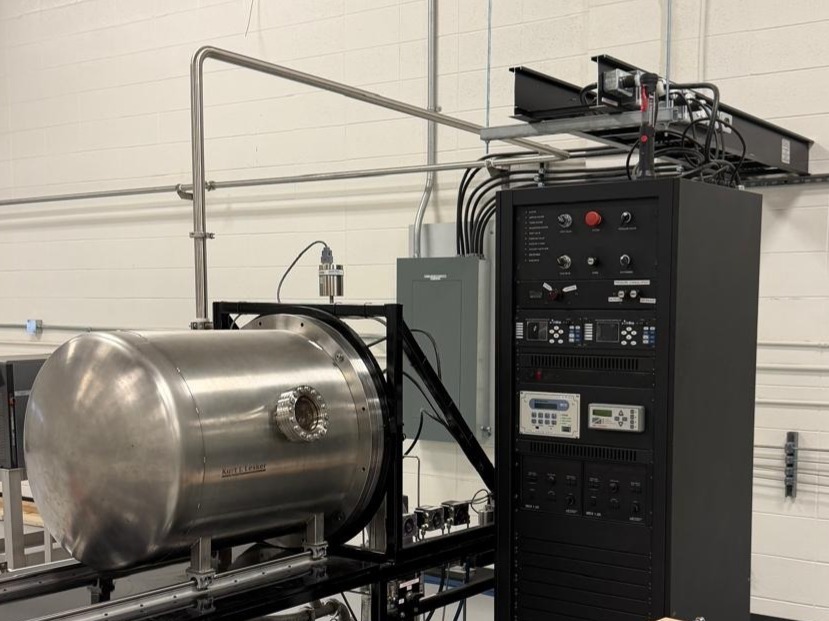
Produced at our Edmonton pilot facility, with operations being validated to ISO and cGMP standards for clinical-grade output.
510(k), with patent protection.
The Trivera™ wound dressing is being developed for the FDA's 510(k) regulatory pathway as a Class II medical device. This is the established path for antimicrobial wound dressings, with predicate devices already on the market. This is a substantially shorter and lower-risk path than pharmaceutical approval, while still requiring rigorous evidence of safety and substantial equivalence.
In Canada, the dressing will be licensed under Health Canada's Medical Devices Regulations (MDR), the parallel pathway for bringing a Class II device to Canadian patients.
The underlying manufacturing process is protected by US patent 12,472,102, with additional patents in preparation. The IP covers both the material itself and the production method that makes it consistent and scalable.
Beyond the wound dressing.
The Trivera™ wound dressing is the first application of FeynMed's nanocrystalline silver platform — not the last. More on where the technology goes next, coming soon.
Relevant publications.
Referenced on this site
- Nadworny, P. L. “Biological Activity of Nanostructured Silver.” PhD thesis, University of Alberta, 2010. University of Alberta ERA
- McDermott, K., Fang, M., Boulton, A. J. M., Selvin, E., Hicks, C. W. “Diabetic Foot Ulcers: A Review.” JAMA, 330(1), 62–75 (2023). DOI: 10.1001/jama.2023.10578
- Redelings, M. D., Lee, N. E., Sorvillo, F. “Pressure ulcers: more lethal than we thought?” Advances in Skin & Wound Care, 18(7), 367–372 (2005). DOI: 10.1097/00129334-200509000-00010
- Agency for Healthcare Research and Quality. “Surgical Site Infections.” PSNet Patient Safety Primer, last updated September 15, 2024. AHRQ Patient Safety Network
- Lachiewicz, A. M., Hauck, C. G., Weber, D. J., Cairns, B. A., van Duin, D. “Bacterial Infections After Burn Injuries: Impact of Multidrug Resistance.” Clinical Infectious Diseases, 65(12), 2130–2136 (2017). DOI: 10.1093/cid/cix682
- Gallant-Behm, C. L., Yin, H. Q., Liu, S., Heggers, J. P., Langford, R. E., Olson, M. E., Hart, D. A., Burrell, R. E. “Comparison of in vitro disc diffusion and time kill-kinetic assays for the evaluation of antimicrobial wound dressing efficacy.” Wound Repair and Regeneration, 13(4), 412–421 (2005). Seven silver-containing products and two non-silver topical agents, tested against 17 clinically relevant microorganisms. DOI: 10.1111/j.1067-1927.2005.130409.x
- Hatch, K. K. A., Burrell, R., Ward, A. C. “Effect of a Novel Sputtering Process on the Chemical and Biological Properties of Silver-Gold Alloys.” International Wound Journal (2024). DOI: 10.1111/iwj.14475
- Nadworny, P. L., Wang, J., Tredget, E. E., Burrell, R. E. “Anti-inflammatory activity of nanocrystalline silver in a porcine contact dermatitis model.” Nanomedicine: Nanotechnology, Biology, and Medicine, 4(3), 241–251 (2008). DOI: 10.1016/j.nano.2008.04.006
- Nadworny, P. L., Wang, J., Tredget, E. E., Burrell, R. E. “Anti-inflammatory activity of nanocrystalline silver-derived solutions in porcine contact dermatitis.” Journal of Inflammation, 7:13 (2010). DOI: 10.1186/1476-9255-7-13